





Polish Citizenship by Descent: Your Gateway to Living, Working and Raising a Family in Poland and the EU
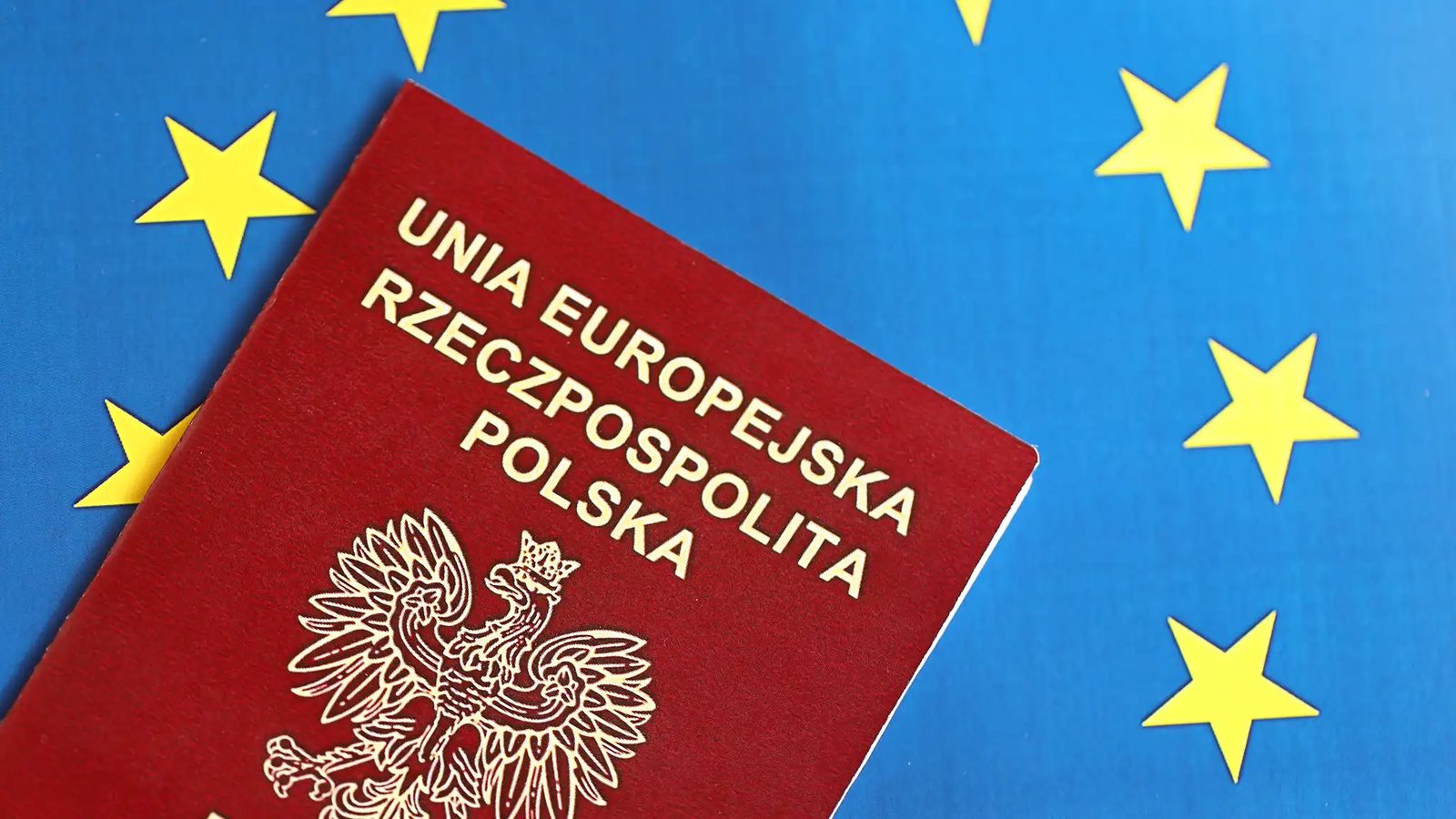
Many of the people who contact our office assume their family left Poland "too long ago." Often the documents tell a different story. A successful confirmation gives you a Polish passport, and with it, full citizenship of the European Union. That means the right to live, work, study and raise a family in Poland and in every other EU member state.
How citizenship by descent works, even many generations later
Polish citizenship passes from parent to child by blood (ius sanguinis), wherever the child is born. If your ancestor was a Polish citizen and the citizenship was never lost along the way, each generation after them was born Polish. That is why a great-grandchild, or a great-great-grandchild, can still qualify.
The legal procedure is called confirmation of possession of Polish citizenship. You are not applying to become Polish. You are asking a Polish authority to confirm that you already are.
What has to be true
- Your ancestor held Polish citizenship. Modern Polish citizenship dates from the Citizenship Act of 20 January 1920. In most cases, ancestors who emigrated before Poland regained independence in 1918 never became Polish citizens, but there are some exceptions.
- The citizenship was not lost before it passed to the next generation. Under the pre-1951 law, a Polish citizen could lose citizenship by, for example, voluntarily naturalizing in another country or serving in a foreign army without permission. Dates matter: a great-grandfather who became a U.S. citizen may still have passed citizenship on.
- Each link can be documented. Birth and marriage records, Polish passports or ID cards, military and census records, and naturalization files tie each generation to the next.
Common pitfalls
- The father's line versus the mother's line. Before 1951, children of married parents generally followed the father's citizenship, and a woman who married a foreigner often lost hers. A maternal line is not ruled out, but it needs careful analysis.
- Name changes and spelling. Anglicized surnames and inconsistent records are common and can usually be explained with supporting documents.
- Dual citizenship. Poland does not require you to give up your U.S. or other citizenship. Inside Poland, however, Polish authorities treat you as a Polish citizen only, and you must use your Polish passport to enter and leave the country.
If the chain was broken, all is not lost. Depending on the facts, other routes may exist, such as the Pole's Card (Karta Polaka), restoration of citizenship, or recognition as a Polish citizen after a period of residence.
Poland today: a great place to live and work
The Poland your ancestors left is not the Poland of today. It is now one of Europe's fastest-growing economies, a safe and modern country, and a place where many descendants of emigrants are choosing to build their lives.
- A strong, growing economy. Poland's real GDP grew 3.6% in 2025, compared with 1.5% for the EU as a whole. It is now the sixth-largest economy in the EU, at about €923 billion (Euronews).
- Rising living standards. Adjusted for cost of living, Poland's GDP per person reached 81% of the EU average in 2025, its highest level ever. In 1995 it was just 44% (Notes from Poland).
- Jobs and opportunity. Unemployment, measured by international standards, has stayed near historic lows of about 3% (BNP Paribas). Warsaw, Kraków, Wrocław, Gdańsk and Poznań are hubs for technology, finance, engineering and international business services, and many employers work in English.
- Safety. In the 2026 Global Peace Index, Poland posted the largest improvement of any country, rising from 45th to 22nd place (Notes from Poland). Eurostat data also place Poland among the three EU countries where the fewest residents report crime, violence or vandalism in their area (Euronews).
- Quality of life. Poland offers historic cities, efficient public transport, Baltic beaches, the Tatra Mountains and a rich food and cultural life, often at a lower cost than major U.S. or Western European cities. For many families, it is also a chance to reconnect with their heritage and language.
Raising a family in Poland
For families, Poland combines strong public support with safe communities and affordable, high-quality education.
- A monthly child benefit for every child. The "Family 800+" program pays PLN 800 per month for each child under 18, with no income test, and the benefit is not taxed (Rodzina 800 plus). Over 18 years, that adds up to PLN 172,800 per child.
- Generous parental leave. Working mothers receive 20 weeks of maternity leave for a single birth, followed by 41 weeks of parental leave that parents can share. Fathers also receive 2 weeks of fully paid paternity leave. These benefits are paid by Poland's social insurance system, not by the employer (RemotePass, Leave Balance).
- Free public education, through university. Public schools are free. Full-time, Polish-language degree programs at public universities are free for Polish citizens (Study in Poland), and Polish universities offer hundreds of programs taught in English as well.
- Public healthcare. Children are covered by Poland's public health system, and insured adults receive care through the National Health Fund (NFZ). Private clinics are widely available and affordable by U.S. standards.
- Extra support for larger families. Families with three or more children can get the Large Family Card (Karta Dużej Rodziny), with discounts on transport, culture, sport and shopping, plus additional child tax credits.
- Safe, walkable communities. Low crime, parks, good public transport and strong extended-family traditions make Poland a comfortable place for children to grow up.
The added value: you become a citizen of the European Union
Poland has been a member of the European Union since 2004. Every Polish citizen is automatically an EU citizen, and that opens doors across the continent, not only in Poland.
- Live, work and study in any of the 27 EU countries. No visa, work permit or residence permit is required (European Commission). You could work in Warsaw, take a job in Berlin or Dublin, or retire in Portugal or Spain.
- Border-free travel. Poland is part of the Schengen Area, which now covers 29 countries (Savory & Partners). You travel within it without border checks, and you will not need the new travel authorization that applies to visitors.
- Equal treatment. EU countries must treat you like their own citizens in jobs, business and many public services.
- Education across Europe. Your children can study at universities throughout the EU, often at local tuition rates or for free, and take part in exchange programs such as Erasmus+.
- Healthcare while traveling. The European Health Insurance Card gives access to necessary state healthcare during temporary stays in other EU countries.
- Consular protection worldwide. Outside the EU, where Poland has no embassy, you can turn to the embassy or consulate of any other EU member state (European Commission).
- A legacy for your children. Once your citizenship is confirmed, your minor children can be confirmed as well, and future generations born to you inherit it automatically.
- Keep your American citizenship. You do not have to choose. You can hold both a U.S. and a Polish passport.
What a Polish passport can mean in practice
The scenarios below are illustrative examples of how families use Polish citizenship. They are not descriptions of specific clients.
- The great-granddaughter in tech. A software engineer in New Jersey traces her line to a great-grandfather born near Rzeszów in 1898, who arrived in the U.S. in 1921 and naturalized in 1934, after her grandfather was born. Her citizenship is confirmed. She accepts a position with a company in Kraków and moves without needing a work visa.
- The young family. A couple in Chicago, one of them a fourth-generation Polish American, confirm citizenship for the parent and their two children. They relocate to Gdańsk, enroll the children in public school, and receive the 800+ child benefit for each child.
- The student. A college graduate with Polish citizenship enrolls in a Polish-language master's program at a public university in Warsaw tuition-free, then spends a semester in Spain through Erasmus+.
- The retiree. A recently retired teacher confirms her citizenship to spend part of each year in Poland near relatives, and the rest traveling across the Schengen Area without time limits on her stays.
- The entrepreneur. A business owner uses EU citizenship to open a company in Poland, serve clients across the EU single market, and travel freely to meet them.
How the process works, and how we can help
Interest in Polish citizenship is growing fast. In 2025 alone, the Mazowiecki Voivode, who handles applications from people living abroad, opened 24,592 confirmation cases (Polish Ministry of the Interior reply to the Sejm).
A typical case moves through these steps:
- Initial assessment. We review what you know about your family: names, dates, places of birth and emigration, and naturalization.
- Archival research. We locate birth, marriage and citizenship records in Polish and U.S. archives, working with our research partner in Warsaw.
- Document preparation. We obtain apostilles, arrange sworn Polish translations, and prepare the application in Polish.
- Filing and follow-up. We file with the Voivode and handle all correspondence, including requests for additional documents and appeals if needed.
- After the decision. We help you transcribe your U.S. birth and marriage certificates into the Polish civil registry, obtain a PESEL number, and apply for your Polish passport, and we can then file for your children.
The Law Office of Monika Ellacott is a New York practice focused on Polish citizenship by descent, Polish passport and consular matters, and related estate and family law. We work in English and Polish and represent clients throughout the United States.
Find out whether you qualify. Contact us for a consultation:
Law Office of Monika Ellacott 100 Church Street, Suite 800, New York, NY 10007 Tel. 646-737-8870 · [email protected]
Attorney Advertising. This article provides general information only and is not legal advice. Each citizenship case depends on its own facts and documents. Prior results do not guarantee a similar outcome.

 (646) 737-8870